
Loading the lesson
Loading the lesson
Search AllRounder.ai
Search the courses, subjects, tracks, games and features, or jump straight to a page.
Search the courses, subjects, tracks, games and features, or jump straight to a page.
Learn it your way
A short class with Sarah and her students. The other ways are under More.
Sign up free to listen. Transcripts are free to read.

Today, we're diving into the concept of the 'rate of a chemical reaction'. Can anyone tell me what that means?

Is it how fast a reaction happens?
Exactly! The rate of a reaction quantifies how the concentration of reactants or products changes over time. We can express it as an average rate: Average Rate = Δ[R]/Δt. Can you guess what Δ[R] represents?

It’s the change in concentration, right?
Correct! And how about instantaneous rate?

I think it’s the slope of the concentration-time graph at a particular time?
Spot on! Remember, we can visualize this as a curve. As we take the slope at any point, we find the instantaneous rate.

So, it’s like looking at a speedometer at a particular moment while driving?
That's a great analogy! To summarize, the rate of a reaction can be average or instantaneous, helping us understand how quickly our reactions occur.

Now, let's discuss the factors that can affect the rate of a reaction. Can anyone list a few?
Concentration, temperature, and catalysts?
Great! Higher concentration usually increases reaction rates, alongside increased temperature that brings more energy into play. You all know that, right?
Yes! More particles mean more collisions!
Exactly! And what’s a catalyst do in this scenario?
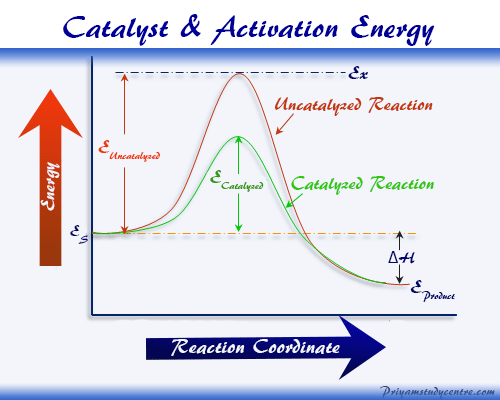
It speeds up the reaction by lowering the activation energy.
Correct! Now remember, reaction rates also depend on surface area and the nature of the reactants. How do you think surface area comes into play?
Finer particles have more area exposed for reactions?
Absolutely right! To wrap this up, we have concentration, temperature, catalysts, surface area, and nature of reactants as key factors affecting reaction rates.
As we continue, let's look at the rate law. It links the rate of a reaction to the concentrations of reactants. Does anyone know its general form?
It’s Rate = k[A]^x[B]^y?
Perfect! Here, 'k' is our rate constant, while x and y represent the orders of reactions with respect to A and B. Remember, these values are determined experimentally and may not match stoichiometric coefficients. Why is this important?
I guess we can’t rely solely on the equation, we need experiments!
Right! Now what's the order of a reaction?
It’s the total of the exponents in the rate law.
Exactly! So, if we have a zero-order reaction, what does that mean?
The rate is constant and doesn’t depend on concentration?
Correct! It’s foundational to our understanding. Always remember, understanding the rate law and reaction order helps in predicting the behavior of reactions in different conditions.
In our next session, we will review the integrated rate equations. Can someone tell me the integrated equation for a zero-order reaction?
It’s [A] = [A]0 - kt!
Good! And what about a first-order reaction?
Maybe [A] = [A]0 e^(-kt) or ln[A] = ln[A]0 - kt?
Correct! Understanding these equations allows us to predict concentrations at any given time. Now, moving on to half-lives, what can you tell me about the half-life of a first-order reaction?
It’s independent of the initial concentration and is calculated using t₁/₂ = 0.693/k.
Excellent! Keeping these formulas in mind is crucial—half-life can often help in understanding reaction kinetics.
Measures the change in concentration of reactants/products over time.
Includes concentration, temperature, catalysts, surface area, and nature of reactants.
Mathematical expression that relates rate to concentrations of reactants.
Sum of the powers in the rate law which determines dependency on reactant concentrations.
Number of particles involved in an elementary step of a reaction.
Equations that relate concentration and time.
Time required for the concentration of a reactant to reduce to half.
Describes how rate constant varies with temperature.
Explains the necessity of effective collisions for reactions.
Sequence of elementary steps leading to the overall reaction.
In a reaction between hydrogen and oxygen to form water, increasing the temperature often increases the rate of formation due to more energetic collisions.
An example of zero-order reaction is the decomposition of ammonia on a solid surface, where the rate depends on the catalyst surface, not the concentration.
The faster the pace, the more reactants race; concentration high, temperature high, catalysts in the mix, they’ll fly!
Imagine a crowded cafe (high concentration) where everyone is chatting loudly (high temperature). A waiter (catalyst) makes them sit at smaller tables—suddenly, they are talking faster and more efficiently (higher reaction rate).
To remember the factors affecting rates, think 'CAT-SN': Concentration, Activation energy (catalysts), Temperature, Surface area, Nature of reactants.
Use ‘RATE’ to remember: R - Reactants, A - Activation Energy, T - Temperature, E - Effects of Catalysts.
Term
Rate of Reaction
Click to flip
Term
Catalyst
Click to flip
Term
Half-Life
Click to flip
Term
Collision Theory
Click to flip
Term
Integrated Rate Equation
Click to flip
The study of rates of chemical reactions and the factors affecting these rates.
The change in concentration of a reactant or product per unit time.
The rate calculated over a specific time interval.
The rate of reaction at a specific moment, determined by the slope of the concentration-time graph.
An equation expressing the relationship between the rate of a reaction and the concentration of its reactants.
The sum of the powers of the concentration terms in the rate law.
The number of reactant species involved in an elementary reaction.
A mathematical expression that relates concentration and time for a reaction.
The time required for the concentration of a reactant to reduce to half its initial value.
An equation that shows the relationship between the rate constant and temperature.
A theory that explains how reactants must collide in order to react.
The sequence of elementary steps by which a chemical reaction occurs.
Chemical kinetics explores the rates of chemical reactions and the factors that influence these rates.
This section covers key concepts of chemical kinetics, including the rate of reactions, factors affecting rates, the rate law, order and molecularity of reactions, integrated rate equations, half-lives, and the Arrhenius equation. Understanding these principles is vital for controlling chemical processes in various applications, from industrial to biological systems.
Chemical kinetics is the study of the rates at which chemical reactions proceed and the factors that influence these rates. While thermodynamics indicates whether a reaction can occur, kinetics informs how quickly it will take place. The section discusses:
The rate measures how the concentration of reactants or products changes over time.
Rate of Reaction
Average Rate: Average Rate = Δ[R] / Δt It measures the change in concentration [R] of a reactant or product over a time interval Δt.
Instantaneous Rate: Instantaneous Rate = |d[R]/dt| It is the rate at a particular moment in time, obtained as the slope of the concentration vs. time curve.



The rate law relates reaction rate to the concentration of reactants raised to a power denoting their order.
General form:
Where:
The order is the sum of the powers in the rate law:
Molecularity refers to the number of reactant particles involved in an elementary step, which can be whole numbers (1 to 3).
These are used to relate concentration and time, helpful for calculating half-lives. Examples include:
Half-life (t₁/₂) is time taken for half of the reactants to be consumed:
The rate constant (k) increases with temperature:
For a reaction to occur, particles must collide effectively. Effective collisions must have sufficient energy and proper orientation, with activation energy being the threshold for these collisions.
A reaction mechanism consists of sequential elementary steps, with the slowest step dictating the overall reaction rate. An example illustrates how intermediate products form during transitions in the reaction process.
Understanding the principles of chemical kinetics is crucial for applications in various fields, including pharmaceuticals, engineering, and environmental science.