
Loading the lesson
Loading the lesson
Search AllRounder.ai
Search the courses, subjects, tracks, games and features, or jump straight to a page.
Search the courses, subjects, tracks, games and features, or jump straight to a page.
Learn it your way
A short class with Sarah and her students. The other ways are under More.
Sign up free to listen. Transcripts are free to read.

Today we will explore electrochemical cells. Can anyone tell me what they think an electrochemical cell does?

Isn't it a device that converts chemical energy into electrical energy?
Exactly! We have two main types: galvanic cells, which convert chemical energy into electrical energy through spontaneous reactions, and electrolytic cells, which do the opposite. Can anyone give me an example of a galvanic cell?

How about the Daniel Cell?
Great example! Now, what are the practical uses of electrolytic cells?

They are used in electroplating and water electrolysis!
Correct! Now, remember: Galvanic = Get Energy; Electrolytic = Energy to Create. This can help you keep them straight.

So, it's like a power source versus a power user?
Exactly! Let's summarize: Galvanic cells generate electrical energy, while electrolytic cells require electrical energy. Great start!

Moving on to redox reactions! Can anyone explain what oxidation and reduction mean?
Oxidation is when a substance loses electrons, and reduction is when it gains electrons.
Spot on! To remember this, use the mnemonic OIL RIG – Oxidation is Loss, Reduction is Gain. Why is this important in electrochemistry?
Because it drives the reactions in electrochemical cells?
Correct! Let's dig deeper: what is electrode potential?
It’s the voltage developed by an electrode in contact with its ions, right?
Exactly! And the Standard Hydrogen Electrode is our reference point. Now let's wrap this session up: remember the keywords OIL RIG for redox reactions and that electrode potentials are crucial in determining how reactions proceed.
Next, let's discuss EMF, or Electromotive Force. Who can tell me what that is?
Isn't it the difference in electrode potentials?
Yes! And how is it calculated?
By subtracting the anode potential from the cathode potential, right?
Correct! And it relates closely to Gibbs Free Energy. Can anyone remind us of the relationship between these two concepts?
It’s ΔG = -nFE_cell, where ΔG is Gibbs Free Energy change!
Exactly! Energy free flows when it goes negative! Let's underscore that: EMF reflects the potential for work and relates directly to Gibbs Free Energy. Well done!
Let’s now dive into the Nernst Equation. Who can explain what this equation helps us determine?
It calculates electrode potential under non-standard conditions?
Correct! And it takes into account the concentration of reactants and products. Does anyone remember the formula?
It's E = E° - 0.0591 log[products]/[reactants]!
Excellent! And how about for a general reaction aA + bB → cC + dD? Anyone?
E = E° - 0.0591 log[C]c[D]d/[A]a[B]b!
Perfect! Let’s summarize today: The Nernst Equation adjusts electrode potential based on concentration; remember to use it for non-standard conditions. Great job, everyone!
Finally, let's explore electrolysis. Can anyone explain what electrolysis involves?
It's the breaking down of substances using electricity!
Exactly! The flow of current causes ions to migrate to electrodes. What are two laws relating to electrolysis?
Faraday’s First and Second Laws, right?
Spot on! Faraday's First Law states that the mass deposited is proportional to the charge passed, while the Second Law relates mass deposition to equivalent weights. Can anyone think of real-world applications of electrolysis?
Electroplating and water splitting for hydrogen?
Correct! To conclude, electrolysis is crucial in many fields, ranging from industrial processes to sustainable energy. Great round of discussions today!
Devices that convert chemical energy to electrical energy (galvanic cells) or vice versa (electrolytic cells).
Reactions involving the transfer of electrons, categorized into oxidation (loss of electrons) and reduction (gain of electrons).
Formula that adjusts electrode potential based on reactant and product concentrations in non-standard conditions.
Descriptors of the quantitative relationship between electric charge and mass of substance deposited during electrolysis.
The potential difference across an electrochemical cell driving electron movement, calculated from electrode potentials.
A galvanic cell sings with power, converting energy each hour.
Imagine a little galvanic cell bravely waking up each morning to convert energy from metals into electricity, meanwhile, its electrolytic cousin sleeps, waiting for a charge!
OIL RIG: Oxidation is Loss, Reduction is Gain.
E=E°-0.0591 log: A simple way to remember the Nernst equation!
Term
What is a Galvanic Cell?
Click to flip
Term
What does the Nernst Equation calculate?
Click to flip
Term
Define Redox Reaction.
Click to flip
Term
What is EMF?
Click to flip
The branch of chemistry that deals with the relationship between electricity and chemical reactions.
An electrochemical cell that converts chemical energy into electrical energy through spontaneous redox reactions.
An electrochemical cell that converts electrical energy into chemical energy through non-spontaneous redox reactions.
A chemical reaction that involves the transfer of electrons between two species.
The measure of the potential difference developed by an electrode when in contact with its ions in solution.
An equation used to calculate the electrode potential under non-standard conditions.
The potential difference across an electrochemical cell, driving the movement of electrons.
Laws that quantify the relationship between the amount of substance deposited during electrolysis and the electric charge passed.
The ability of a solution to conduct electricity, related to the concentration and mobility of ions.
The gradual destruction of metals by chemical or electrochemical reaction with their environment.
Electrochemistry examines the relationship between electricity and chemical reactions, particularly in converting chemical energy to electrical energy and vice versa.
This section focuses on the core principles of electrochemistry, including types of electrochemical cells, redox reactions, electrode potentials, the Nernst equation, conductance, and practical applications such as batteries and corrosion prevention. Understanding these topics is essential for grasping how energy transformations occur in chemical processes.
Electrochemistry is the study of how chemical energy can be transformed into electrical energy and the reverse, exploring electrochemical cells, redox reactions, and practical applications like batteries and corrosion prevention.
Electrochemical cells are categorized into:
.png)


This series ranks elements by standard reduction potentials, aiding in predicting oxidizing and reducing agents and electron flow direction.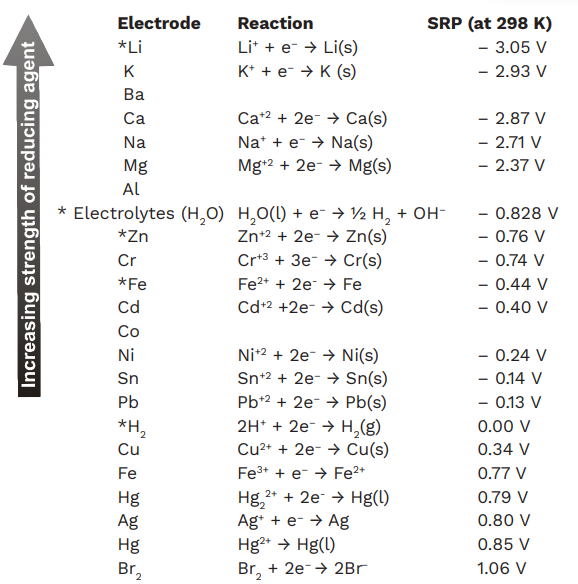
Standard notation represents the cell configuration. An example is Zn(s) | Zn²⁺(aq) || Cu²⁺(aq) | Cu(s) with a salt bridge to maintain electrical neutrality.
This equation predicts electrode potential under non-standard conditions, essential for understanding actual cell performances.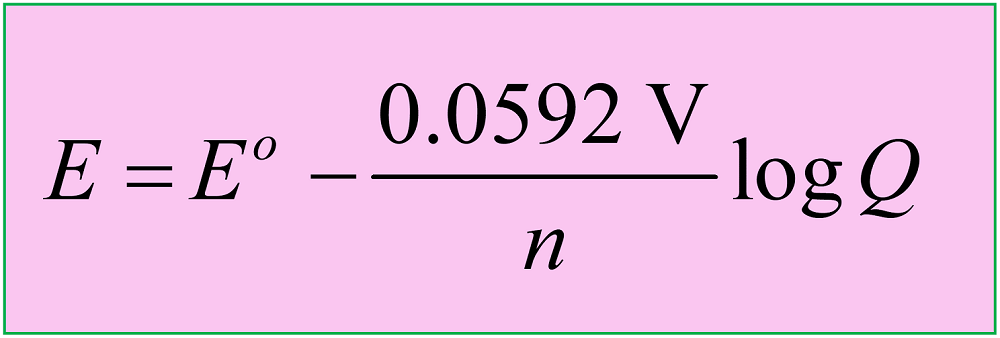
Conductance types include specific conductance and molar conductance, which vary with electrolyte strength and dilution.
This law, indicating Λ∞ = λ+ + λ−m, helps estimate molar conductivity at infinite dilution and the degree of dissociation of weak electrolytes.
Electrolysis allows materials to break down by electrical current, with Faraday’s laws quantifying deposition based on charge.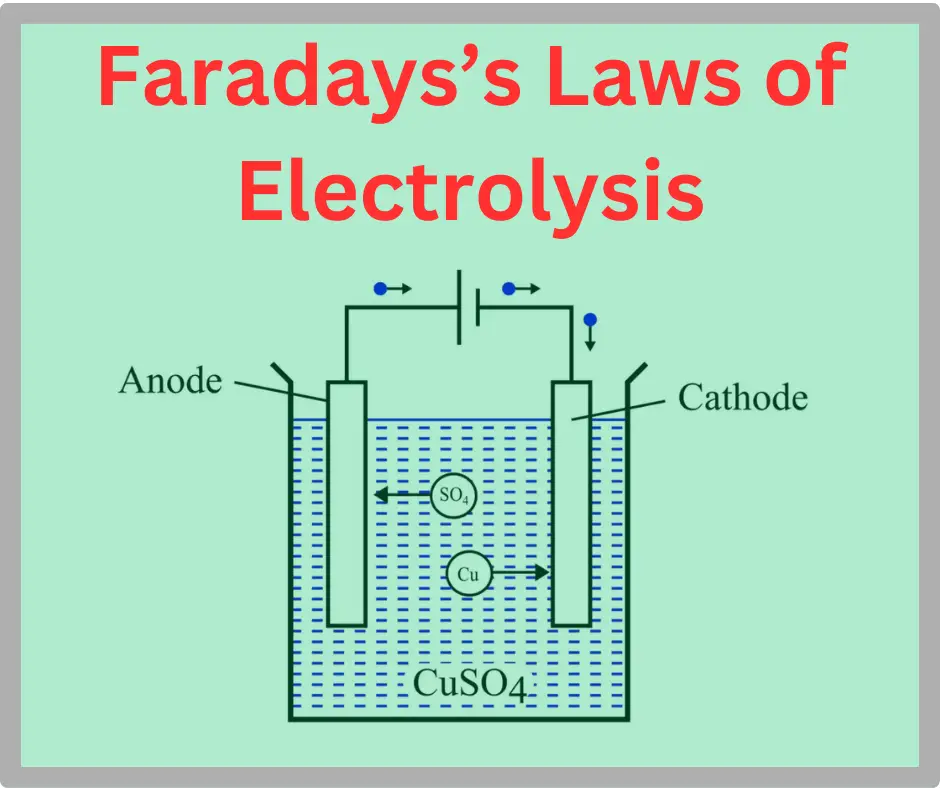
Differentiates between primary batteries (non-rechargeable) and secondary batteries (rechargeable), as well as outlines fuel cells.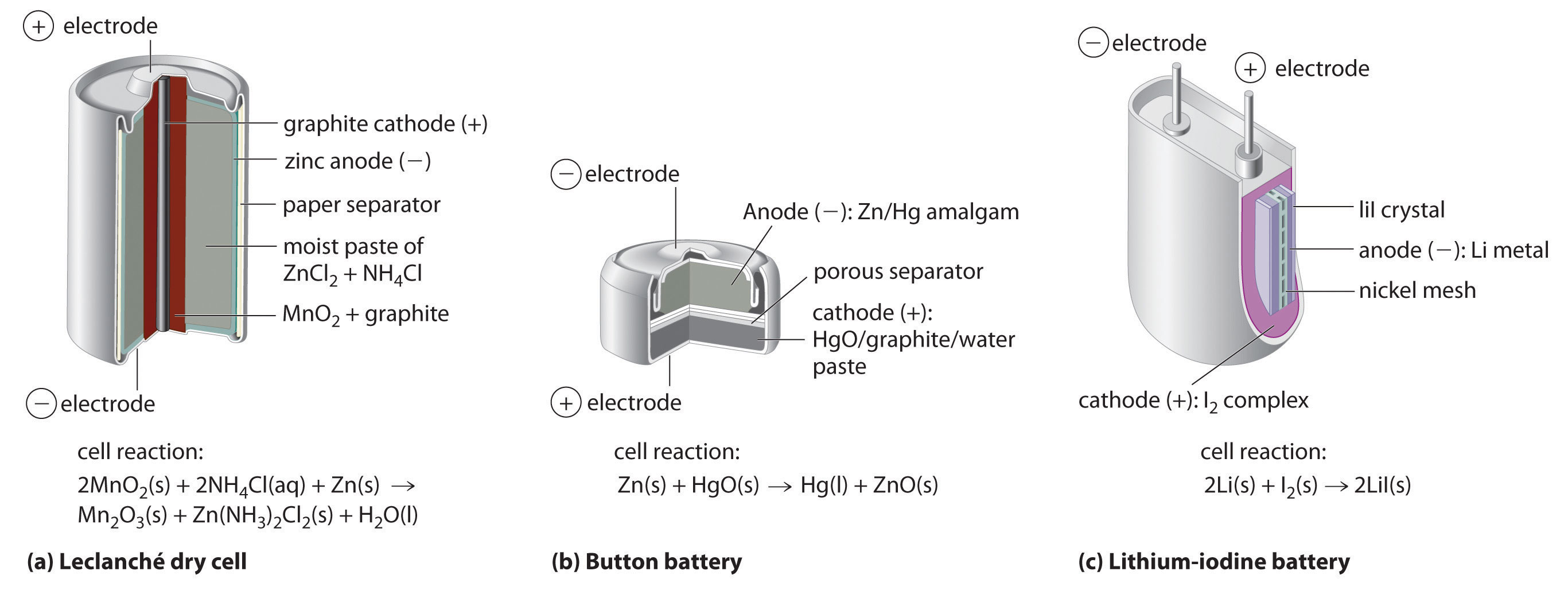
Corrosion involves the gradual destruction of metals through electrochemical reactions, with various preventive measures described.