
Loading the lesson
Loading the lesson
Search AllRounder.ai
Search the courses, subjects, tracks, games and features, or jump straight to a page.
Search the courses, subjects, tracks, games and features, or jump straight to a page.
Learn it your way
A short class with Sarah and her students. The other ways are under More.
Sign up free to listen. Transcripts are free to read.

Welcome, class! Today we are diving into carbohydrates—a crucial type of biomolecule. Can anyone tell me what carbohydrates are?

Are they just sugars?
Good start! Carbohydrates are indeed sugars, but they can be defined more broadly as polyhydroxy aldehydes or ketones, or compounds that yield these products when we hydrolyze them. What are the three main classifications of carbohydrates?

Um, is it monosaccharides, oligosaccharides, and polysaccharides?
Exactly! Let's expand. Monosaccharides are simple sugars, oligosaccharides contain 2-10 monosaccharide units, and polysaccharides consist of many monosaccharides. Remember: M-O-P for Monosaccharides, Oligosaccharides, and Polysaccharides. What does each kind do?

Monosaccharides are the building blocks. Oligosaccharides are for energy transport, right?
Yes, and polysaccharides are mainly for storage! Great job, everyone. Today’s key takeaway is that carbohydrates are essential for energy and structure.

Now let’s dive deeper into monosaccharides. Who can give me one example of a monosaccharide?

I know—glucose!
Perfect! Glucose is a core example. It has the formula C₆H₁₂O₆ and can be found in fruits. What about its form?
It can be linear or cyclic, right?
Exactly! And it even shows something called mutarotation. Does anyone know what that means?
It’s the change between its α and β forms?
Yes! Great connection. Don't forget, glucose is vital for energy production in our bodies, making it perhaps the most important sugar.
Let’s move on to oligosaccharides. What defines these?
They are made up of 2 to 10 monosaccharides!
Correct! And which types are considered disaccharides?
Sucrose, lactose, and maltose?
That's right! Sucrose is glucose plus fructose, while lactose consists of glucose and galactose. Can anyone explain why knowing these structures is important?
Because they affect how our body processes sugars!
Excellent point! Understanding these sugars helps us grasp energy production in living organisms. Keep that in mind!
Now, who can tell me what polysaccharides are?
They are long chains of monosaccharides!
Exactly! They are critical for storage and structure. What are a few examples?
Starch, cellulose, and glycogen!
Right! Starch is energy storage in plants, cellulose gives structure to plant cell walls, and glycogen serves the same function in animals. Remember: Cellulose is Cell-structural, Glycogen is G-for-Storage.
The simplest form of carbohydrates that cannot be further hydrolyzed. Example: Glucose.
Comprised of 2-10 monosaccharides, including disaccharides like sucrose and lactose.
Long chains of monosaccharides with examples like starch, cellulose, and glycogen.
Carbs bring energy, make walls stand tall, glucose and sucrose are here for us all!
Once upon a time, in the land of sugars, Glucose and Fructose teamed up to make Sucrose, while Starch and Cellulose had a tall structure party. They danced to the rhythm of energy!
Remember M-O-P: Monosaccharides are the building blocks, Oligosaccharides are for transport, and Polysaccharides are storers!
MOP = Monosaccharides, Oligosaccharides, Polysaccharides - your carbohydrate family!
Term
Definition of Monosaccharides
Click to flip
Term
Example of Oligosaccharides
Click to flip
Term
Function of Polysaccharides
Click to flip
The simplest form of carbohydrates that cannot be hydrolyzed further.
Carbohydrates that yield 2-10 monosaccharide units upon hydrolysis.
Large carbohydrate molecules formed from many monosaccharides.
A type of covalent bond that connects monosaccharide units in oligosaccharides and polysaccharides.
The change between different cyclic forms of monosaccharides in a solution.
The ring structure that monosaccharides can assume in aqueous solutions.
A chemical process that splits a molecule by adding water, breaking down carbohydrates.
Monosaccharides that contain an aldehyde group.
Monosaccharides that contain a ketone group.
Carbohydrates are essential biomolecules classified as monosaccharides, oligosaccharides, and polysaccharides, playing crucial roles in energy storage and cellular structure.
Carbohydrates are organic compounds consisting of sugar molecules that serve as crucial energy sources for living organisms. They are classified into three categories: monosaccharides (single sugars), oligosaccharides (short chains of sugars), and polysaccharides (long chains of sugar units). Each type plays a distinct role in biological processes, including energy storage and providing structural integrity in plants.
Carbohydrates are organic compounds defined as polyhydroxy aldehydes or ketones, or compounds that yield these products upon hydrolysis. They are classified based on hydrolysis behavior into three main categories:
1.Monosaccharides: The simplest form of carbohydrates, consisting of single sugar units that cannot be hydrolyzed further. Examples include glucose and fructose.
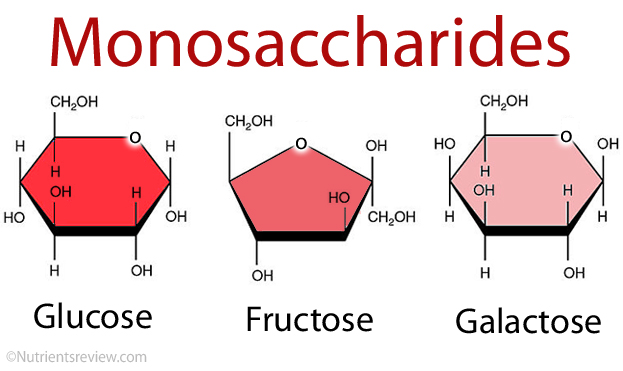
2.Oligosaccharides: Composed of 2-10 monosaccharide units linked by glycosidic bonds. Examples include sucrose, lactose, and maltose.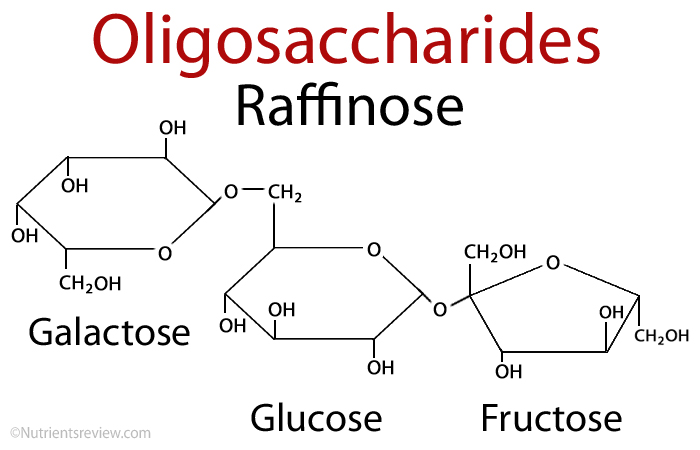
3.Polysaccharides: Large molecules formed from many monosaccharide units. Examples include starch (energy storage in plants), glycogen (energy storage in animals), and cellulose (structural component of plant cell walls).
Understanding carbohydrates is fundamental as they play critical roles in energy provision, structural components, and metabolic processes within living organisms. Each type of carbohydrate serves specific functions which are vital for cellular integrity and energy dynamics.