
Loading the lesson
Loading the lesson
Search AllRounder.ai
Search the courses, subjects, tracks, games and features, or jump straight to a page.
Search the courses, subjects, tracks, games and features, or jump straight to a page.
Learn it your way
A short class with Sarah and her students. The other ways are under More.
Sign up free to listen. Transcripts are free to read.

Today we're discussing why Europeans sought out trade with India. Can anyone tell me what goods they were particularly interested in?

Spices, silk, and cotton!
That's right! The demand for these products was huge. What happened in 1453 that changed trade routes?

The fall of Constantinople blocked the overland routes!
Exactly! This led to the search for new sea routes. Does anyone know how this affected the European countries?

They needed to find a way to reach India directly by sea.
Yes, this created opportunities for new trading ventures.
To remember the key motivations, think of the acronym 'SSE' for Spices, Silk, and Exploration.
In summary, Europeans were drawn to India for valuable goods and a direct trade route after traditional paths were blocked.

Now let's talk about the major European trading companies. Who can name the first European country that established a trading presence in India?

Portugal, led by Vasco da Gama!
Correct! The Portuguese reached India in 1498. What were their key bases?
Goa, Daman, and Diu.
Great! What about other trading companies? Who founded the Dutch East India Company?
The Dutch did, in 1602!
Right! And who knows about the British East India Company?
It was established in 1600 and became the most powerful trading company in India!
Exactly! Remember the acronym 'PDEBF' for Portuguese, Dutch, English, French, to keep track of these trading powers.
In summary, these companies transformed trade and set the stage for European influence in India.
Let's connect the decline of the Mughal Empire to the rise of European influence. What happened after Aurangzeb died in 1707?
The Mughal Empire weakened and regional rulers gained power!
Exactly! How did this affect the European trading companies?
It gave them a chance to interfere and gain control, right?
Yes! The political vacuum allowed them to expand their influence. Can anyone think of a specific example?
The British exploited these rivalries, right?
Absolutely! Remember the mnemonic 'PRIME': Political Rivalries Invite Market Exploitation, summarizing how regional politics opened doors for European control.
To summarize, the decline of the Mughal Empire provided an opportunity for European companies to expand in India.
Major entities like the Portuguese, Dutch, British, and French that penetrated the Indian market.
The weakening of Mughal authority post-Aurangzeb's reign allowed European powers to rise.
Methods like Subsidiary Alliance and Doctrine of Lapse used by the British to consolidate power.
In the east, spices grow, with silk that flows, trade was the goal, as exploration shows.
Once there were brave sailors from Europe with an unquenchable thirst for exotic spices. They sailed across deep waters, reaching India, where they discovered treasures like silk and cotton, changing the world forever.
Remember 'PDEBF': Portuguese, Dutch, English, French - for the major trading companies in India.
Use 'SSE' - Spices, Silk, Exploration to recall the motivations behind European expeditions.
Term
What was the key good sought by Europeans?
Click to flip
Term
Who founded the Dutch East India Company?
Click to flip
Term
What did the Doctrine of Lapse entail?
Click to flip
A British trading company founded in 1600 that eventually established political control over large parts of India.
The first European nation to reach India by sea, establishing trade routes and centers.
A chartered company of Dutch merchants established in 1602 to exploit trade with the East in spices and other goods.
A diplomatic strategy used by the British to exert influence over Indian states by requiring them to maintain British troops.
A British policy that annexed Indian states when a ruler died without a male heir.
The arrival of European traders in India for profitable trade evolved into political control, primarily through the British East India Company.
European traders entered India to access valuable items like spices and textiles, leading to the establishment of major trading companies. Dominating this landscape was the British East India Company, which transitioned from trade to political power through strategic wars and alliances, reshaping India's socio-political landscape.
The arrival of European traders in India marked a pivotal moment in the region's history, primarily driven by the demand for Indian goods such as spices, silk, cotton, and indigo. Following the fall of Constantinople in 1453, traditional overland trade routes were obstructed, compelling Europeans to seek new maritime avenues to reach the subcontinent. Four significant European trading companies emerged during this period:
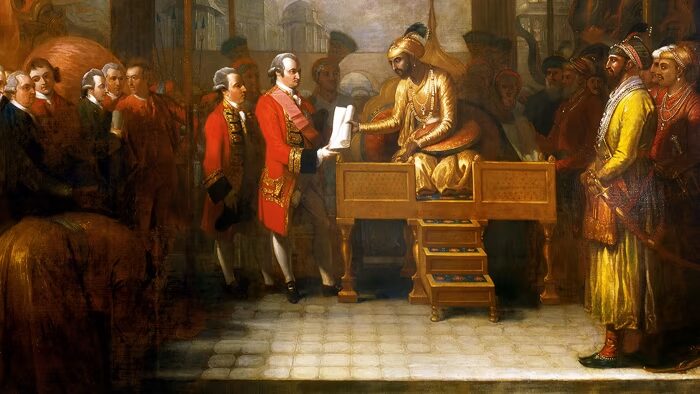

The decline of the Mughal Empire post-1707 created a vacuum where regional rulers gained power, allowing European companies to assert influence through warfare and diplomatic maneuvers, leading to significant shifts in political control.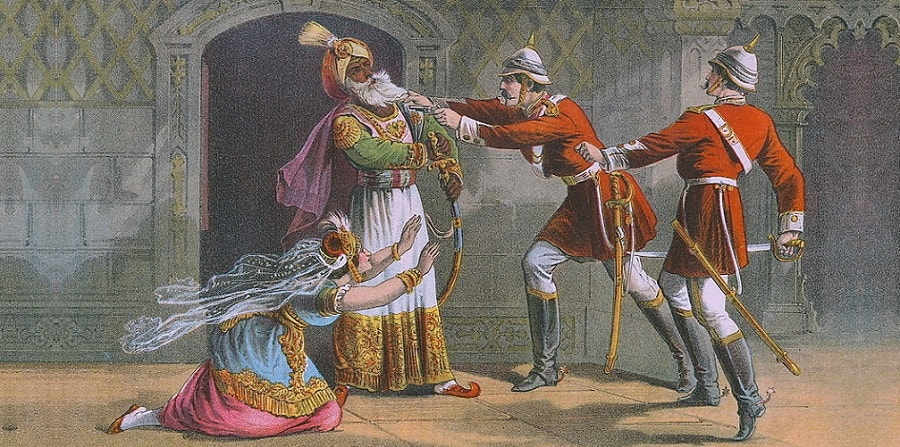
This section underscores the transition of European traders from mere merchants to powerful rulers, with their actions laying the groundwork for British colonial dominance that would last well into the 20th century.
