
Loading the lesson
Loading the lesson
Search AllRounder.ai
Search the courses, subjects, tracks, games and features, or jump straight to a page.
Search the courses, subjects, tracks, games and features, or jump straight to a page.
Learn it your way
A short class with Sarah and her students. The other ways are under More.
Sign up free to listen. Transcripts are free to read.

Let's discuss the political causes that contributed to the Great Uprising of 1857. One major factor was the Doctrine of Lapse formulated by Lord Dalhousie.

Can you explain what the Doctrine of Lapse was?
Sure! The Doctrine of Lapse allowed the British to annex Indian states if a ruler died without a direct heir. This policy angered many nobles. For example, Awadh was annexed in 1856, claiming misrule.

What specific examples can you give of states that were annexed?
States like Satara in 1848 and Jhansi in 1853 were annexed under this doctrine. This was a significant factor in the widespread unrest.

So, it caused not just dissatisfaction among rulers but also among common people, right?
Absolutely! The political dissatisfaction fueled the desire for unity against British colonization.

Lastly, how did these actions lead to the overall uprising?
The annexation policies exemplified the ways the British undermined Indian authority, leading to widespread resentment and ultimately, collective rebellion. In summary, the political discontent was foundational for the uprising.

Now, let's move on to the economic factors. The British enforced high taxes and interfered with local economies.
How did that affect the common people?
This led to significant poverty among both farmers and artisans, disrupting their livelihoods. The influx of cheap British goods also crippled local industries.
And what about the military? I've heard soldiers were unhappy.
Yes, Indian soldiers, or sepoys, were not treated equally to their British counterparts. They were paid less and faced discrimination. Their discontent was a key factor.
Was there a specific event that triggered the revolt among soldiers?
Exactly. The introduction of the new Enfield rifle, particularly the greased cartridges made with animal fat, was offensive to both Hindus and Muslims, sparking immediate rebellion.
In summary, these economic and military grievances pushed sepoys into revolt, right?
Correct! These discontented soldiers formed the backbone of the rebellion.
Let's look at how the revolt began. The immediate spark was at Meerut on May 10, 1857. Can anyone tell me what happened?
The sepoys refused to use the greased cartridges and were punished, right?
That's right! This punishment sent shockwaves through the ranks. How did this escalate?
The other soldiers rallied, killed British officers, and marched to Delhi to declare the Mughal emperor as their leader.
Excellent! This declaration gave the revolt a national flair. Now, who were some of the notable leaders and which cities were pivotal during the revolt?
Well, there was Rani Lakshmibai in Jhansi, Nana Saheb in Kanpur, and Begum Hazrat Mahal in Lucknow.
Correct! These leaders were key in organizing resistance, showing that the uprising was widespread.
So, the revolt was a collective effort and not just limited to one location?
Exactly! It spread across multiple regions, highlighting the united front against British rule.
Now, let's discuss the suppression of the revolt. Can anyone explain why the British were able to regain control?
They had better organization and technology. Their military resources were superior!
Correct! Additionally, there was a lack of unity among Indian leaders which further weakened the rebellion. Can you name any key events during the suppression?
Delhi was retaken in September 1857. Rani Lakshmibai died in battle, and Nana Saheb fled to Nepal!
Perfect! Now, what were the key consequences of this uprising?
It led to the end of the East India Company and a direct rule from the British government!
"Absolutely right! The revolt also sparked a sense of nationalism that would inspire future movements for independence.
Policies like the Doctrine of Lapse led to widespread resentment.
Heavy taxation and disruption of traditional industries created poverty.
Fear of forced conversion and reform sparked distrust.
Poor treatment of sepoys and the Enfield rifle controversy triggered the uprising.
In '57, they took a stand, against the British, hand in hand.
Imagine sepoys discovering they are not equal in rank to British soldiers; their anger grows, leading to rebellion.
PEM: Politics, Economics, Military - the causes of the revolt.
SRI: Sepoys, Rage, Independence - capturing the essence of the revolt.
Term
What was the primary reason for the Doctrine of Lapse?
Click to flip
Term
What event sparked the initial revolt?
Click to flip
Term
Name one key leader in the revolt.
Click to flip
Term
What was a significant outcome of the Uprising?
Click to flip
A policy by the British allowing annexation of Indian kingdoms without a natural heir.
An Indian soldier serving under British command.
A type of rifle introduced by the British Army that became central to the revolt due to issues with the cartridges.
The monarch of the Mughal Empire, who, during the revolt, was declared the symbolic leader of the uprising.
A political ideology that emphasizes the interests of a particular nation, often in opposition to colonial or external control.
The Great Uprising of 1857 marked a significant rebellion against British rule in India, resulting from years of exploitation and discontent.
This uprising, often regarded as India's First War of Independence, stemmed from political, economic, and social grievances against British authorities. Despite its ultimate failure, the revolt highlighted the desire for freedom among Indians and set the stage for future nationalist movements.
The Great Uprising of 1857, also known as the First War of Indian Independence, represents a pivotal moment in Indian history. While British officials labeled it a mutiny, it was primarily a response to prolonged economic, political, and cultural grievances against colonial rule.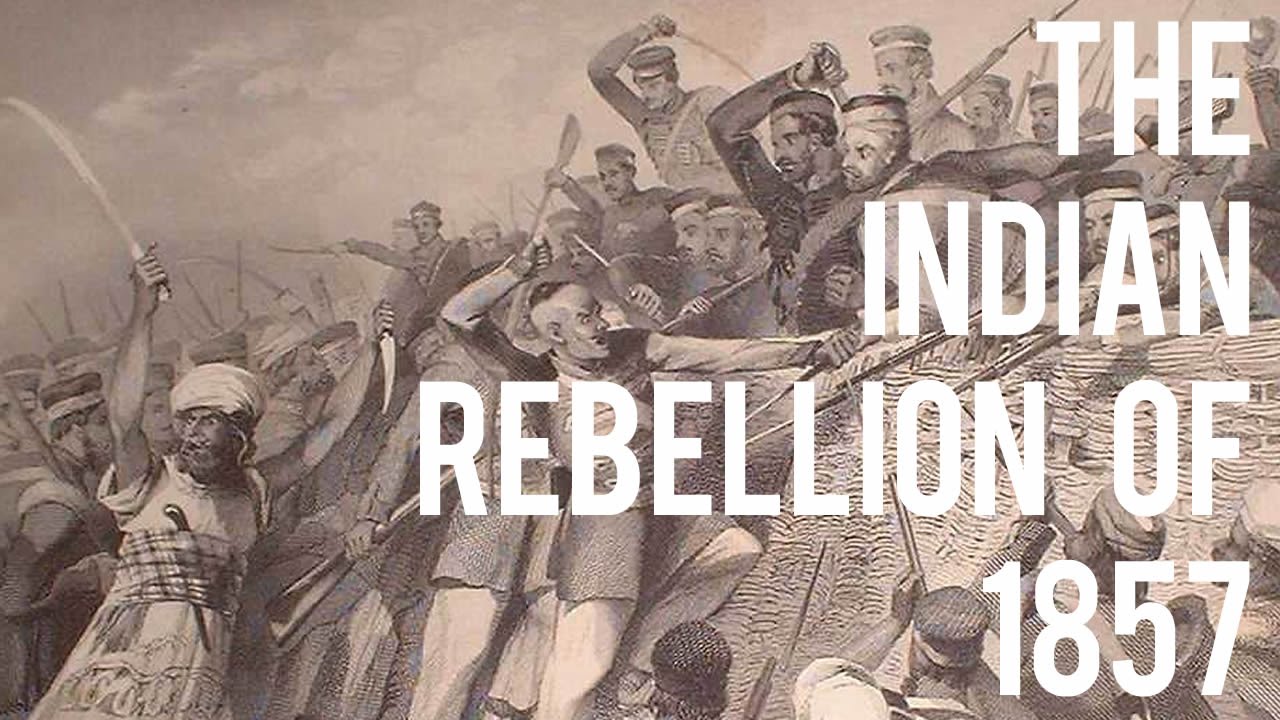

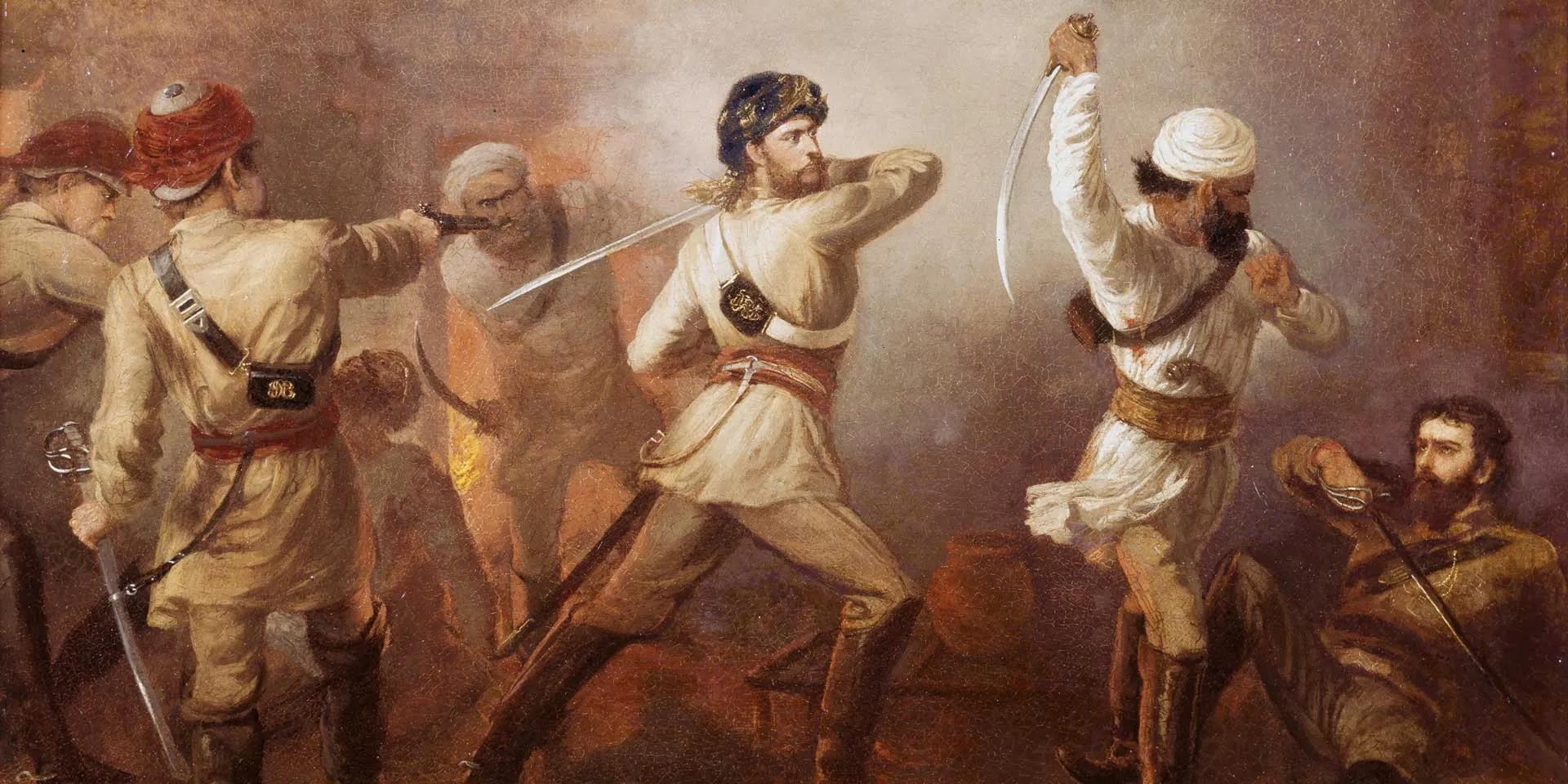
The uprising ignited on May 10, 1857, when sepoys in Meerut revolted against punitive actions for refusing to use the greased cartridges. This event sparked widespread rebellion and ultimately led to the declaration of Mughal Emperor Bahadur Shah Zafar as the symbolic leader of the revolt.
Various regions became focal points of resistance, with leaders like Nana Saheb in Kanpur, Rani Lakshmibai in Jhansi, and Begum Hazrat Mahal in Lucknow galvanizing support against the British.
Despite initial successes, the revolt was quelled by the British, who regained control through superior resources and a lack of coordinated leadership among Indian leaders. Consequently, key consequences emerged:
The uprising, although crushed, was a turning point that set the groundwork for future struggles against colonial oppression.