
Loading the lesson
Loading the lesson
Search AllRounder.ai
Search the courses, subjects, tracks, games and features, or jump straight to a page.
Search the courses, subjects, tracks, games and features, or jump straight to a page.
Learn it your way
A short class with Sarah and her students. The other ways are under More.
Sign up free to listen. Transcripts are free to read.

Let's begin by discussing the causes of the First War of Independence. Can someone tell me how the Doctrine of Lapse contributed to this revolt?

The Doctrine of Lapse allowed the British to annex princely states without male heirs, which angered many Indian rulers.
Exactly! This feeling of political alienation was significant. Now, what do you think about the economic conditions for Indians under British rule?

Many farmers were affected by heavy taxes and the destruction of local industries, leading to poverty.
Great observation! Can anyone explain some social or military concerns that spurred the revolt?

British interference in religious practices really upset people, and sepoys were discriminated against.
Excellent points! Remember, the discontent was multifaceted. Each of these causes interlinked and fueled resentment towards British rule.

So it wasn't just one issue but a combination of many that led to the revolt?
Exactly, now let’s summarize: the revolt was ignited by political grievances from the Doctrine of Lapse, economic exploitation, social alienation, and military dissent.

Now, let's look at the course of the revolt starting from its outset. Where did it begin?
It started in Meerut on May 10, 1857.
Correct! And which significant cities did it spread to next?
Delhi, Kanpur, Lucknow, Jhansi, and Gwalior.
Absolutely! And who were some key leaders during this revolt?
Bahadur Shah Zafar, Rani Lakshmibai, Tantia Tope, and Nana Sahib.
Great list! What do you think were the reasons the British ultimately suppressed the revolt?
They had better resources and the rebels weren't unified.
Exactly! The lack of unity among rebels significantly weakened their efforts to sustain the revolt. Let's recap the main points discussed: the revolt started in Meerut, spread to key cities, had notable leaders, but was suppressed due to the British's strengths.
Let’s discuss the aftermath of the Revolt of 1857. What were some of the significant results?
Mughal rule ended, and so did the East India Company's governance.
Correct! And what replaced the East India Company?
Direct rule by the British Crown under Queen Victoria.
Great! Lastly, how did the British respond militarily after the revolt?
They reorganized the army to prevent future uprisings.
Yes! It's crucial to note that the revolt's significance went beyond just the events of 1857. Now, let's summarize. The results included the end of Mughal and East India Company rule, the onset of British Crown governance, and military reorganizations to avert further revolts.
In '57, they took a stand, against the British, united hand in hand.
Imagine a country ruled by a foreign hand, where local kings faced demise due to foreign commands. They united and revolted but were met with might, thus began a struggle for freedom's right.
P.E.S.M. - Political, Economic, Social, Military causes led to the revolt.
R.E.V.O.L.T - Remember Every Victim Of Long Struggle.
Term
What started the First War of Independence?
Click to flip
Term
Who were the key leaders of the revolt?
Click to flip
Term
What were the consequences of the revolt?
Click to flip
A policy introduced by Lord Dalhousie allowing the British to annex princely states that did not have a male heir.
An Indian soldier employed by the British East India Company.
The period of Muslim empire preceding British dominance in India.
An act of violent or open resistance against an established government or ruler.
Control or governance of a country by a foreign power.
The First War of Independence in 1857 marked a significant revolt against British rule in India, driven by various political, economic, social, and military grievances.
This section discusses the causes of the 1857 revolt, including political alienation due to the Doctrine of Lapse, economic exploitation, and military discrimination against Indian sepoys. It details the revolt's course, notable leaders, and its aftermath, including the transition from East India Company rule to British Crown rule.
The First War of Independence, also known as the Sepoy Mutiny, took place in 1857 and was a major, albeit unsuccessful, revolt against British colonial rule in India. This section outlines the causes of the revolt, categorized into four primary areas: political, economic, social, and military grievances.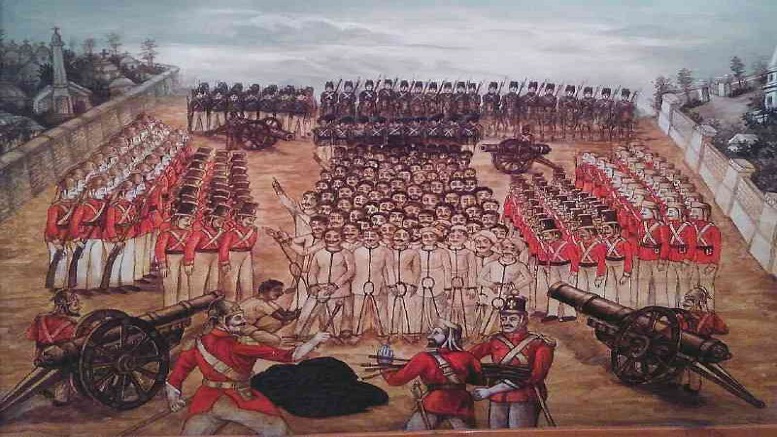

The revolt ignited in Meerut on May 10, 1857, and rapidly spread to key locations including Delhi, Kanpur, Lucknow, Jhansi, and Gwalior. Notable leaders during this revolt included Bahadur Shah Zafar, Rani Lakshmibai, Tantia Tope, and Nana Sahib. Despite strong resistance, the revolt was ultimately suppressed by the British due to their superior resources and the rebels' lack of unity.
The Revolt of 1857 resulted in the following significant outcomes:
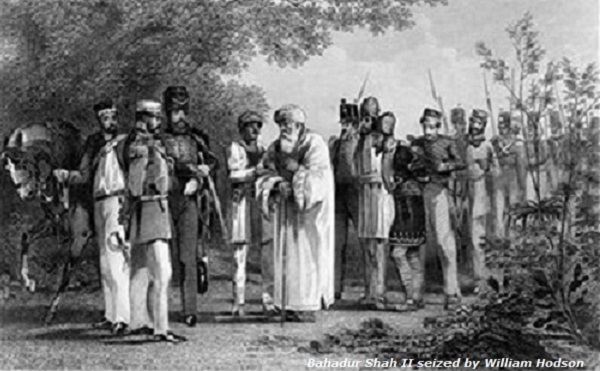
The significance of the First War of Independence is that it laid the groundwork for the ensuing nationalist movements against British rule, highlighting the need for unity among Indians against colonial oppression.