
Loading the lesson
Loading the lesson
Search AllRounder.ai
Search the courses, subjects, tracks, games and features, or jump straight to a page.
Search the courses, subjects, tracks, games and features, or jump straight to a page.
Learn it your way
A short class with Sarah and her students. The other ways are under More.
Sign up free to listen. Transcripts are free to read.

Today, we'll start with chemical symbols, which are the shorthand representations of elements. Can anyone give me an example of a chemical symbol?

Is 'H' the symbol for Hydrogen?
Exactly! And remember, the first letter is always capitalized. What about a two-letter symbol?

'He' for Helium!
Spot on! The second letter in a two-letter symbol is lowercase. Let's remember this with the acronym 'FC-LC' – First capital, Lowercase second.

That helps!
Great! So we can see how these symbols help streamline communication among chemists. Now, how many of you know the origin of sodium's symbol?

I think it’s 'Na' from Latin.
Correct! Remembering that will help you understand more symbols.
To summarize, chemical symbols provide a clear shortcut for easily recognizing elements in our studies.

Now let's delve intoatomicity. Who can tell me what atomicity means?
It’s the number of atoms in a molecule?
Exactly! They can be monoatomic like Helium, diatomic like Oxygen, or even polyatomic like Phosphorus. Want to give me some examples?
'He' for Helium is monoatomic and 'O2' for Oxygen is diatomic!
And 'P4' for Phosphorus is polyatomic!
Well done! To remember these types, think of 'Mono-Di-Tri-Poly' – the more atoms, the bigger the prefix! Let's recap: Atomicity helps us understand the structure of molecules.
Next, let’s talk about chemical formulae. Why do we need them?
To show the elements and how many atoms of each are in a molecule?
Absolutely! For example, water's formula is H₂O, meaning two hydrogen atoms and one oxygen atom. Who can come up with another example?
Carbon dioxide, which is CO₂!
Right! Formulae convey essential information that allows us to understand a compound's makeup. Let's use a mnemonic: H2O for water – think of it as 'H-two-oh, two hydrogen, one oxygen!' It’s all about clear representation.
That's catchy!
Now, let’s discuss valency. Who can tell me what that means?
It’s the number of electrons that an atom can gain, lose, or share?
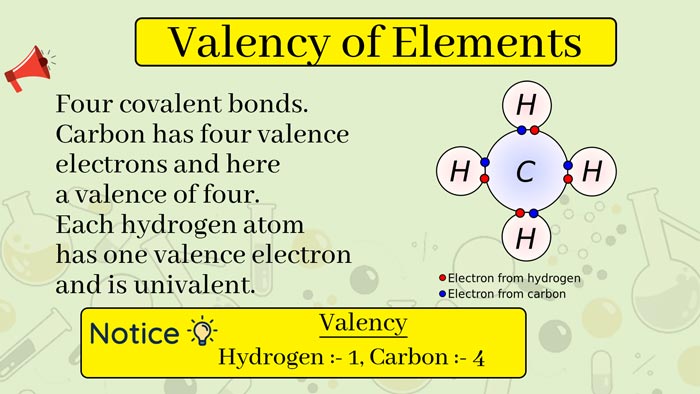
Yes! Valency is crucial for writing correct chemical formulas. For example, hydrogen has a valency of 1. What about oxygen?
Oxygen has a valency of 2.
Exactly! Remembering some common valencies can help when writing formulas. Try using 'H.O.N.C.' for Hydrogen, Oxygen, Nitrogen, and Carbon and their corresponding valencies: 1, 2, 3, 4, respectively. To put it simply, understanding valency helps us create compounds correctly.
Finally, let’s cover chemical equations. Why do we need to balance them?
To obey the Law of Conservation of Mass, right?
Correct! The number of atoms on both sides must be equal. Let's see an unbalanced equation: Fe + O₂ → Fe₂O₃. What do we need to do to balance it?
We need to adjust the coefficients!
Right again! The balanced equation would be 4Fe + 3O₂ → 2Fe₂O₃. Let's recap: Balancing equations helps us accurately depict chemical reactions and transforms.
Represent elements using standardized notation.
Indicates the number of atoms in a molecule.
Show the composition of compounds.
Reflects the combining capacity of atoms.
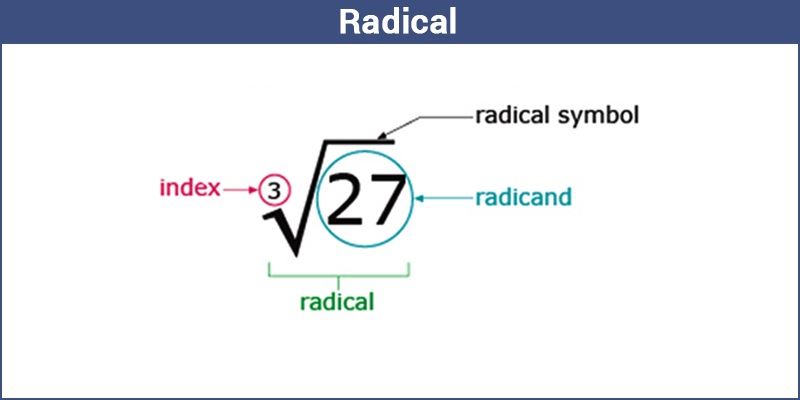
Groups that behave as units and carry charges.
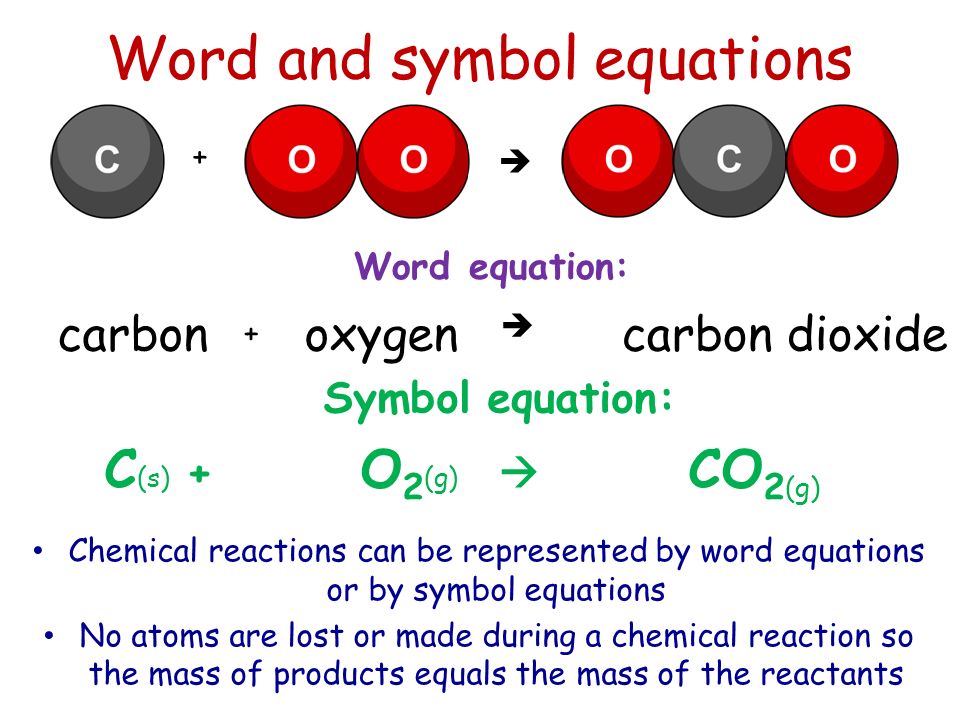
Represent and require balancing to demonstrate reactions.
To calculate valency, just follow the hen, one is for H, and four is for C again.
Once upon a time, in a village of elements, Hydrogen wanted to bond with Oxygen. Understanding its valency helped it find the perfect match to form water!
Remember H.O.N.C. for Hydrogen, Oxygen, Nitrogen, and Carbon with valencies of 1, 2, 3, and 4.
Think ‘C-Atomic’ for CArbon Atomicity.
Term
What is the valency of Carbon?
Click to flip
Term
What does a diatomic molecule mean?
Click to flip
Standardized notation representing elements in chemistry.
The number of atoms in a molecule of an element.
A symbolic representation of a chemical compound's composition.
The combining capacity of an atom determined by electrons in its outer shell.
Atoms or groups of atoms behaving as a single unit, carrying a charge.
Representations of chemical reactions using symbols and formulae.
The Language of Chemistry encompasses the universal symbols, formulae, and equations used to communicate chemical ideas clearly.
In this section, we explore the key elements of the Language of Chemistry, including chemical symbols, atomicity, formulae, valency, radicals, and chemical equations. Each concept builds upon the last to provide a comprehensive understanding of how these elements interact and are applied in chemical reactions.
Chemistry is often referred to as the central science as it bridges both physical and life sciences. To facilitate clear communication among chemists, a universal language has been established. This language incorporates:



Understanding these components enables chemists to express complex ideas and reactions in a standardized manner.