
Loading the lesson
Loading the lesson
Search AllRounder.ai
Search the courses, subjects, tracks, games and features, or jump straight to a page.
Search the courses, subjects, tracks, games and features, or jump straight to a page.
Learn it your way
A short class with Sarah and her students. The other ways are under More.
Sign up free to listen. Transcripts are free to read.

Today, we are going to discuss the occurrence of hydrogen. Can anyone tell me where hydrogen can be found?

Isn't it found in stars?
Absolutely! Hydrogen is abundant in the universe, especially in stars. It's rare on Earth in its free state. Now, can anyone mention a place where hydrogen is commonly combined with other elements?

How about in water?
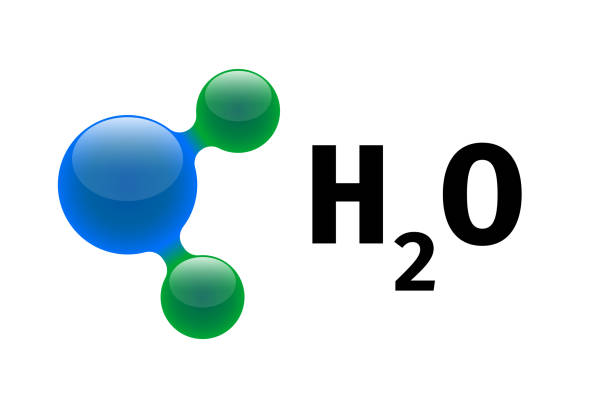
Correct! In fact, water is H₂O, where hydrogen is combined with oxygen. Remember, hydrogen is also found in acids and organic compounds. A great way to remember this is to think of the acronym H2O - 'Hydrogen Meets Oxygen'!

So, is hydrogen just in water and acids?
Good question! Hydrogen is also a major part of many organic compounds like carbohydrates, proteins, and fats. It plays a crucial role in life on Earth.

Is it really as abundant as you say?
Yes! Hydrogen constitutes about 75% of the universe's mass. Just keep in mind, while rare on Earth in its free state, it is a fundamental building block of the universe.
To wrap up, can someone summarize what we just learned about the occurrence of hydrogen?
Hydrogen is mostly found in stars and is abundant in water, acids, and organic compounds!

Now that we know where hydrogen occurs, why do you think it's important for us to study hydrogen?
Maybe because it’s involved in so many reactions?
Exactly! It's crucial in many chemical reactions and is essential in the formation of water, which is vital for life. What else?
Isn't it used to create energy?
Yes! Hydrogen's role in energy production, such as in fuel cells, is becoming increasingly important as we explore clean energy options. Another great thing to remember is that hydrogen is the most abundant element, so its study can help us understand the universe better.
Wait, so hydrogen helps make acids and things like proteins too?
That's right! Hydrogen is fundamental in so many biological and chemical processes. To summarize, understanding hydrogen's occurrence helps us in various scientific and practical applications.
Hydrogen, key to life, A friend to stars, without strife.
Imagine a small hydrogen atom traveling through space, waving to all the stars, knowing it's part of water that gives life on Earth.
H2O: Hydrogen's happy home with Oxygen.
H.A.C.K. - Hydrogen Abundant in the Cosmos and Keys to life.
Term
Hydrogen
Click to flip
Term
Free State
Click to flip
Term
Combined State
Click to flip
Term
Organic Compounds
Click to flip
The first and lightest element in the periodic table, symbolized as H.
Condition where hydrogen exists independently, usually found in stars.
Condition where hydrogen is bonded with other elements in compounds such as water.
Compounds that contain carbon and are essential to living organisms, such as carbohydrates, proteins, and fats.
Hydrogen is the most abundant element in the universe, occurring both freely and in various compounds.
Hydrogen exists in free states in the universe, particularly in stars, but is more commonly found in combined states, such as in water, acids, and organic compounds. It constitutes about 75% of the universe's mass.
Hydrogen is a ubiquitous element, found in both free and combined states. In the free state, it is very rare on Earth but is abundantly found in stars and the sun. In its combined state, hydrogen is prevalent in several compounds:


Overall, hydrogen constitutes around 75% of the mass of the universe, underlying its significance in both chemistry and cosmology.