Loading the lesson
Loading the lesson
Search AllRounder.ai
Search the courses, subjects, tracks, games and features, or jump straight to a page.
Search the courses, subjects, tracks, games and features, or jump straight to a page.
Learn it your way
A short class with Sarah and her students. The other ways are under More.
Sign up free to listen. Transcripts are free to read.

Let's start with the question: What is an atom? An atom is the smallest particle of an element that retains the chemical properties of that element.

So, is it true that we can't see atoms with our eyes?
Exactly! Atoms are extremely small. Each element comprises only one kind of atom. This basic unit is critical to understanding chemistry.

Are there different types of atoms?
Yes, each element has its distinct atom type, with unique properties. Can anyone tell me what defines an element?

It’s the atomic number, right? Based on the number of protons!
Correct! The atomic number identifies an element. To remember, think 'A = Atoms'!

I get it, atomic number relates to the uniqueness of each element.
Great! In summary, atoms are the smallest units of elements and are invisible to the naked eye, but they determine the chemical properties of matter.

Next, let’s explore the historical development of atomic theory. Have you all heard of Democritus?
Yes! He was the first to propose the idea that matter is made of tiny particles called 'atomos.'
Exactly! And then we have John Dalton, who built upon Democritus's ideas and formulated Dalton's Atomic Theory in the early 19th century. Can anyone tell me some main points of this theory?
All matter is made of atoms, and they're indivisible!
Also, atoms of an element are identical in mass and properties!
Great! But keep in mind that later discoveries showed that atoms can indeed be divided. This is key for understanding modern chemistry.
So, the theory changed as we learned more about atoms?
Exactly! Science evolves with new discoveries, shaping how we understand atomic structure and behavior.
Let’s dive into subatomic particles now. Who can name the three main types of subatomic particles?
Protons, neutrons, and electrons!
Correct! Can anyone tell me their charges?
Protons are positive, neutrons are neutral, and electrons are negative.
Exactly! Protons determine the atomic number and, thus, the element's identity. Let's remember: 'P for positive and Protons!'
What about the mass of these particles?
Good question! Protons and neutrons have a mass of 1 atomic mass unit, while electrons are very light—just 1/1836 of a proton! Here’s a memory aid: think 'Little Electrons, Tiny Masses!'
This is really interesting how these particles work together in an atom!
Indeed! This knowledge sets the stage for understanding atomic structure.
Now, let's discuss the structure of an atom. What are the two main parts of an atom?
The nucleus and the electron shells!
Exactly! The nucleus holds protons and neutrons, while electrons orbit around it in shells. Can anyone explain why the nucleus is positively charged?
Because of the protons!
Right! And remember: 'Nucleus has Negatives (neutrons) but Positives (protons) too!' Can anyone tell me the names or labels of these electron shells?
They are K, L, M, N... or numbered as 1, 2, 3, 4...
Great job! The electrons revolve in fixed paths or energy levels, which helps us understand the atom's energy state.
What happens if an electron jumps from one shell to another?
Good question! Electrons absorb or emit energy when they jump between shells—a key concept in Bohr's model!
Finally, let's talk about valency! Who remembers what valency is?
It’s the combining capacity of an atom!
Exactly! Valency depends on the number of valence electrons. Can someone share the Octet Rule?
Atoms tend to gain, lose, or share electrons to achieve 8 in their outermost shell!
Correct! Now, moving to isotopes and isobars, can someone explain what isotopes are?
Isotopes are atoms of the same element with different mass numbers!
Yes! And what about isobars?
Isobars are atoms of different elements with the same mass number!
Awesome! In summary, we defined valency influenced by the outermost shell electrons, along with isotopes and isobars, expanding our understanding of atomic structure.
Atoms are the basic building blocks of matter, consisting of protons, neutrons, and electrons.
The nucleus contains protons and neutrons, while electrons occupy shells around the nucleus.
The atomic number is the number of protons in the nucleus; the mass number is the sum of protons and neutrons.
Valency determines how atoms combine to form compounds based on outermost shell electrons.
Isotopes are variations of the same element with different mass numbers, while isobars have the same mass number but different atomic numbers.
Atoms so small, beyond what we see, make up the world, you and me!
Once upon a time, in a tiny kingdom lived Atoms, making everything shine. They had Protons that were strong and Neutrons that got along, while Electrons danced in their happy orbit song.
Remember 'PEM' for Protons (Positive), Electrons (Negative), Mass Number (sum of p and n).
We use 'AVIS' to remember: A - Atom, V - Valency, I - Isotopes, S - Shells.
Term
What is an Atom?
Click to flip
Term
Atomic Number
Click to flip
Term
Mass Number
Click to flip
Term
Electrons
Click to flip
Term
Valency
Click to flip
The smallest particle of an element that retains the chemical properties of that element.
The number of protons in an atom, defining the element's identity.
The total number of protons and neutrons in an atom.
The combining capacity of an atom based on valence electrons.
Atoms of the same element with the same atomic number but different mass numbers.
Atoms of different elements that have the same mass number but different atomic numbers.
Atoms are the basic building blocks of matter, comprising subatomic particles like protons, neutrons, and electrons, with a complex structure governed by historical atomic theory.
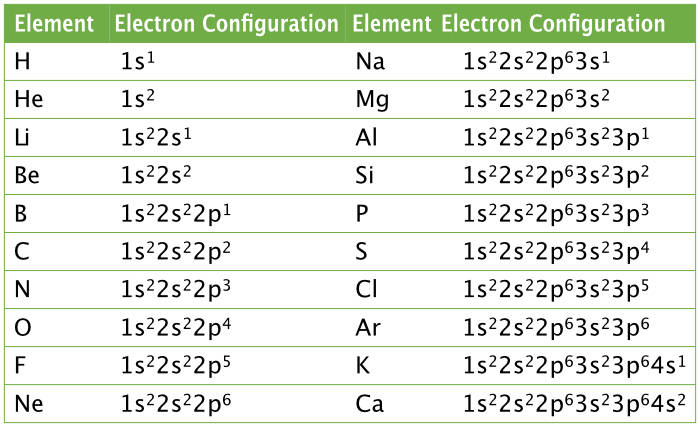
This section delves into the concept of the atom, outlining its structure which includes the nucleus (made of protons and neutrons) and electron shells. It discusses the historical development of atomic theory, notable discoveries of subatomic particles, and the principles like atomic number, mass number, electronic configuration, and valency, crucial for understanding chemical behavior.
Atoms are the fundamental units of matter, consisting of protons, neutrons, and electrons. The concept of the atom has evolved over centuries, starting from Democritus's indivisible particles to John Dalton's atomic theory, which laid the groundwork for modern chemistry. Dalton's theory included important postulates regarding atoms, although later discoveries revealed their divisibility.
Subatomic particles were discovered incrementally: J.J. Thomson identified electrons, Ernest Rutherford discovered protons, and James Chadwick found neutrons. This revelation introduced a new understanding of atomic structure where a nucleus hosts protons and neutrons, and electrons orbit around this nucleus in defined paths or shells, explained further by Bohr's model.
The section also covers concepts like atomic number, which identifies the element, and mass number, indicating the total count of protons and neutrons. Furthermore, it discusses electronic configuration, which explains the arrangement of electrons within shells, leading to the concept of valency that crucially defines how atoms bond. Finally, it examines isotopes and isobars, enhancing our grasp of atomic variation.