
Loading the lesson
Loading the lesson
Search AllRounder.ai
Search the courses, subjects, tracks, games and features, or jump straight to a page.
Search the courses, subjects, tracks, games and features, or jump straight to a page.
Learn it your way
A short class with Sarah and her students. The other ways are under More.
Sign up free to listen. Transcripts are free to read.

Today we are discussing synchronization, which is crucial in multicore systems. Let's start with locks and semaphores. Can anyone tell me what a lock is?

I think a lock is something that prevents more than one thread from accessing a resource at the same time.
Exactly! Locks allow for controlled access to shared resources. Now, can someone explain what a semaphore is?

A semaphore is like a counter that controls access based on how many threads can enter a section at once.
Great! Remember that while locks are more about exclusive access, semaphores can allow multiple accesses. A useful mnemonic for this is 'Locks Latch, Semaphores Signal.'

So, can a lock lead to a deadlock?
Yes! Locks can indeed cause deadlocks if not managed properly. Always think about resource ordering to avoid such issues.

Let’s move on to atomic operations. Who can explain what atomic means in this context?

Isn't it when an operation completes in one go without interruption?
Correct! Atomic operations prevent other threads from interfering while one is incomplete. This is crucial for keeping shared data consistent. Can anyone think of an example of an atomic operation?
I think updating a shared counter could be an example of an atomic operation.
That's a perfect example! If two threads update the counter simultaneously without atomicity, they could overwrite each other’s updates, leading to errors.
So, how do we implement atomic operations in programming?
In many programming languages, there are built-in support or libraries, such as atomic types in C++ or the Atomic module in Java. Remember to always choose atomic operations for critical shared variables!
Now, let’s discuss barriers. What do barriers do in thread synchronization?
Barriers make sure all threads reach a certain point before any can continue.
Exactly! They’re great for ensuring that threads work together effectively. Now, what about deadlocks? Can someone give a quick definition?
Deadlocks happen when threads wait for each other, and they cannot proceed.
That's correct! A simple way to remember how to avoid deadlocks is to use 'Lock Ordering.' If you always acquire locks in a particular order, you can avoid the situation.
Can you provide an example of a deadlock?
Certainly! Imagine Thread A holds Lock 1 and is waiting for Lock 2 while Thread B holds Lock 2 and waits for Lock 1. Neither can proceed, resulting in a deadlock.
Prevent multiple threads from accessing the same resource.
Control access to resources by counting.
Ensure operations are completed without interruption.
Synchronization points for threads in parallel execution.
A situation where threads wait indefinitely on each other.
Using a lock to control access to a bank account object across multiple threads in a banking application.
Implementing a semaphore to limit the number of threads accessing a web server at the same time.
Applying atomic increment operations on a shared counter in a multi-threaded program.
Utilizing barriers in a simulation where all threads must complete a task before any can proceed to the next stage.
Locks secure a door, threads can't explore, semaphores count, access will mount.
Imagine a bank with a single teller (lock) who can only serve one customer at a time. If the teller is busy, other customers (threads) must wait. If too many customers arrive simultaneously, they must remember to take their turns by utilizing their tickets (semaphores) to ensure fair access.
Remember 'LAD': Locks prevent Access Disputes, Semaphores manage counts, and Barriers ensure synchronized entry.
Use 'L.A.B.D.' for Locks, Atomic operations, Barriers, and Deadlocks
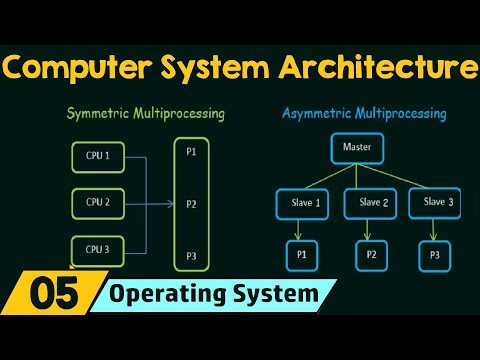
Computer System Architecture

5.7.7 Multicore Processor | CS404 |

HiPEAC ACACES 2024 Summer School - Lecture 4: Memory-Centric Computing III & Memory Robustness

Introduction to Tiled Chip Multicore Processors to remember critical concepts in synchronization.
Term
What does a lock do?
Click to flip
Term
What is a semaphore?
Click to flip
Term
Define deadlock.
Click to flip
Term
What are atomic operations?
Click to flip
Term
What are barriers in threading?
Click to flip
Mechanisms that prevent multiple threads from accessing a shared resource simultaneously.
Counters that control access to a resource based on the number of allowed accesses.
Operations that execute as a single, indivisible unit without interruptions from other threads.
Synchronization points where threads must wait until all have reached that point before continuing.
A situation where two or more threads block each other by each waiting for a resource held by the other.
Synchronization in multicore systems ensures coordinated execution of threads to prevent data corruption during concurrent access to shared resources.
In multicore systems, synchronization mechanisms such as locks, semaphores, atomic operations, and barriers are vital to prevent thread interference and data corruption. It also addresses deadlock scenarios, which occur when threads wait indefinitely due to resource contention, emphasizing the need for efficient coordination in parallel processing environments.
Synchronization is critical in multicore architectures to manage thread execution and ensure data integrity when multiple threads access shared resources. Key synchronization mechanisms include:
Understanding these synchronization mechanisms is vital for developing robust multicore applications that can efficiently execute parallel tasks while maintaining data consistency.